Unlocking the Secrets of Alpine Silver: The Ultimate Guide to Coregone Fishing
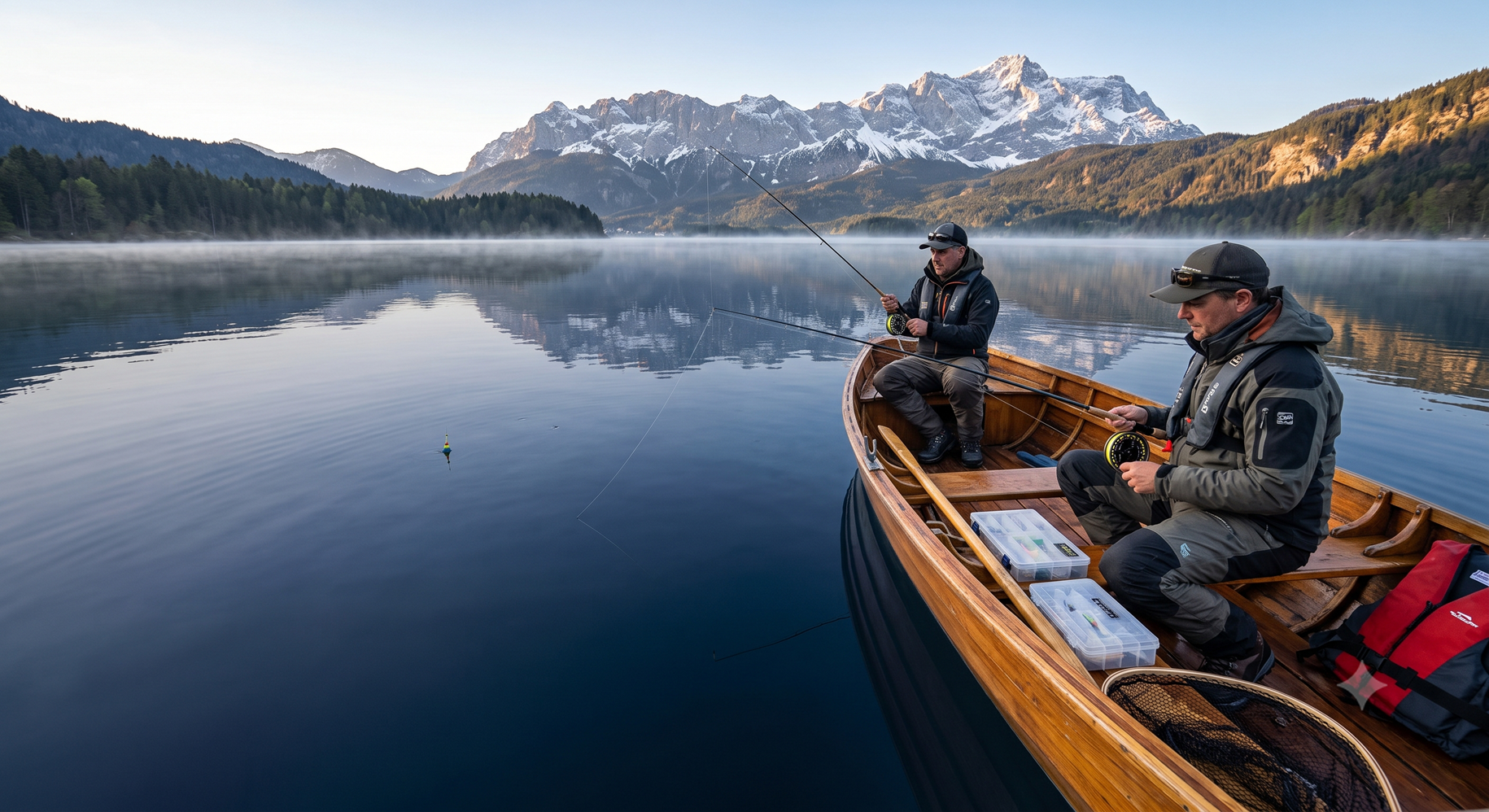
If you've ever cast your line into the pristine, deep lakes of the Alps – be it in Austria, Germany, Switzerland, or Italy – you've probably heard of "Alpine Silver." We're talking, of course, about the Coregone (regionally also known as Reinanke, Felchen, Maräne or Renke).
Coregone are notorious for being selective, cautious, and incredibly rewarding to catch. They are schooling fish that primarily feed on microscopic zooplankton and chironomid (midge) pupae. Due to their unique diet and delicate mouths, targeted angling requires finesse, specialized equipment, and a solid understanding of their habits.
Whether you want to win the OFC Coregone Cup or simply master a new freshwater technique, here's your comprehensive breakdown of how to successfully fish for Coregone.
1. The Basic Equipment: Light, Sensitive, and Precise
You cannot effectively fish for Coregone with your standard perch or pike equipment. Since Coregone have incredibly soft mouths and their bites are notoriously subtle (often just a tiny vibration or a slight slackening of the line), specialized equipment is essential.
The Rod (Coregone Rod): You need a special Coregone rod. These are typically 2.10 m to 2.40 m long and have an ultra-sensitive, spliced-in carbon or glass tip. The rod must have a parabolic action to absorb the unpredictable head shakes of a hooked Coregone without tearing the tiny hook from its paper-thin mouth.
The Reel: Many traditionalists swear by a centerpin reel. A centerpin reel allows for absolute control over the line's descent and provides direct contact with the rig. But a light spinning reel (size 1000), spooled with thin, high-quality braided line (approx. 0.06 mm - 0.08 mm) paired with a fluorocarbon leader, is also highly effective.
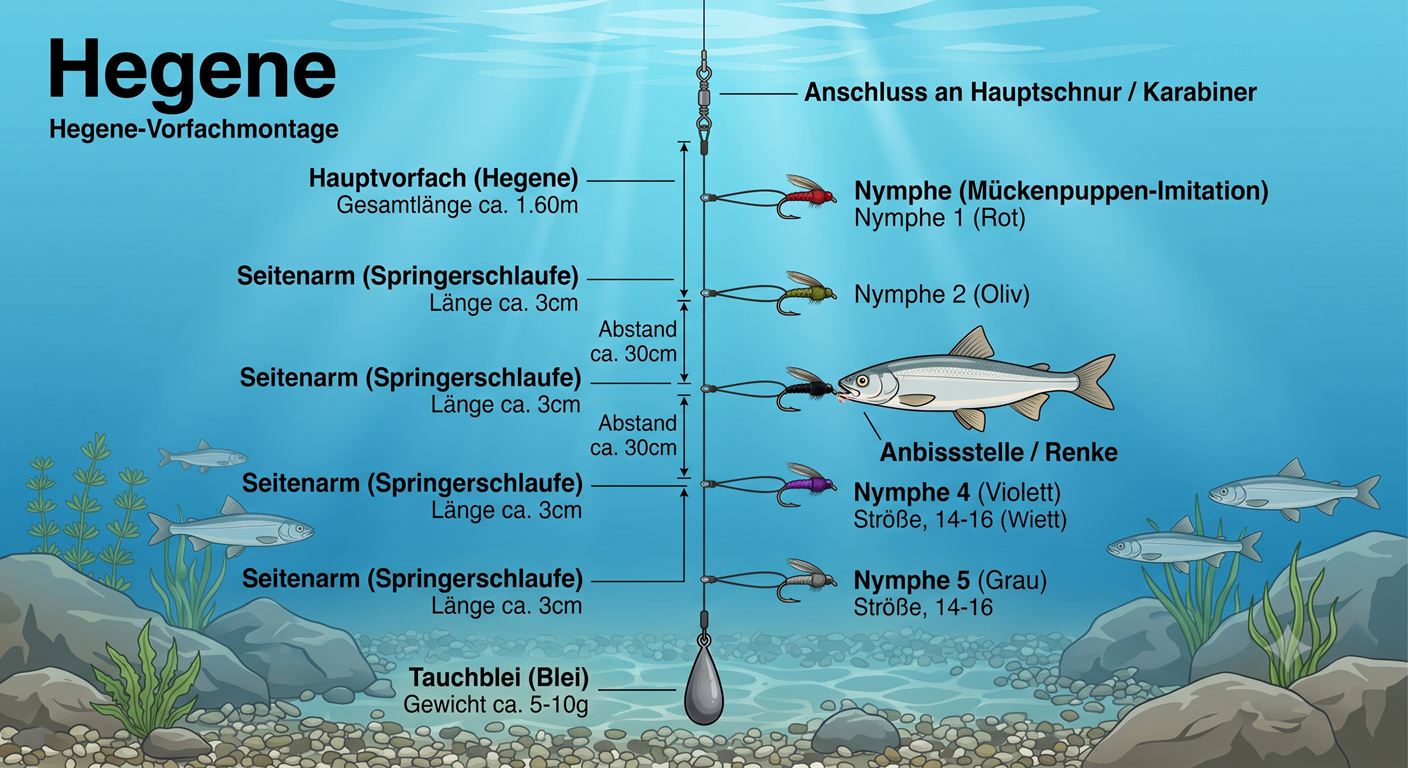
The Rig (The Hegene): This is the miracle weapon for Coregone fishing. A "Hegene" is a special rig with a main leader and 3 to 5 side arms. Tiny artificial nymphs (sizes 12 to 16) imitating ascending midge pupae are attached to these side arms. At the very bottom of the rig is a teardrop-shaped lead (usually 5 to 10 grams).
2. Nymph Selection: Matching the Hatch
Coregone can be incredibly selective when it comes to their food. The color and size of your nymphs will determine your success.
Top Colors: Black, dark red, violet, and olive green are classic guarantors of success.
The Ribbing: A contrasting wire or tinsel ribbing (silver, gold, or copper) often triggers bites.
Glass Beads: Nymphs with tiny colored glass beads can create a visual hotspot in deep, dark water.
Pro Tip: Always fish a Hegene with different nymph colors. As soon as you notice that the Coregone are biting on a specific color, switch to a rig that highlights this successful pattern.
3. Techniques: Vertical Jigging vs. Float Fishing
There are two primary methods for fishing for Coregone, both of which are highly effective depending on the conditions.
Active Vertical Jigging (Zupfen)
This technique is performed from an anchored or drifting boat.
Let your Hegene rig sink all the way to the bottom.
Slowly and evenly lift the rod tip about a meter.
Lower the rod tip just as slowly, keeping the line taut at all times.
Most bites occur during the descent phase. If you feel the slightest tap or the line suddenly goes slack before the lead reaches the bottom, immediately set the hook with a quick but gentle wrist movement.
Float Fishing (Coregone Float)
If you prefer a more relaxed approach, a special Coregone float is ideal. By far the most popular variant is the free-running Coregone float. The ingenious thing about this system: laborious, manual depth adjustment is not necessary! After casting, the line runs completely freely through the float until the lead of the Hegene touches the bottom. Thanks to a special mechanism (the float tilts or clamps the line as soon as the weight rests), the float fixes itself. This way, your nymphs are automatically presented perfectly above the bottom – regardless of whether you are fishing in 10 or 25 meters of depth. The natural wave movement on the lake then causes the float to bob and gives the nymphs below it a tempting, lifelike twitching motion.
4. Finding the Fish
Coregone are a pelagic species, meaning they roam in open water.
Spring: Look in shallower waters (5 to 15 meters) where the water warms up first and insects begin to hatch.
Summer/Autumn: As the surface water warms, Coregone retreat to deeper, cooler, and oxygen-rich waters (15 to 30 meters).
A fish finder is probably your best friend here. Look for dense schools of fish hovering above the bottom. Unlike pure bottom fish, Coregone often stand 2 to 5 meters above the lake bed.
Final Thoughts
Coregone fishing is a masterclass in patience and precision. It forces you to read the water, understand insect life cycles, and fine-tune your reflexes. When you finally make contact with this "Alpine Silver" and gently guide it into your net, you
Comments
No comments yet. Be the first!
Sign in to leave a comment.